
American Plumbing Company: Local Plumbing Service Across the Brazos Valley
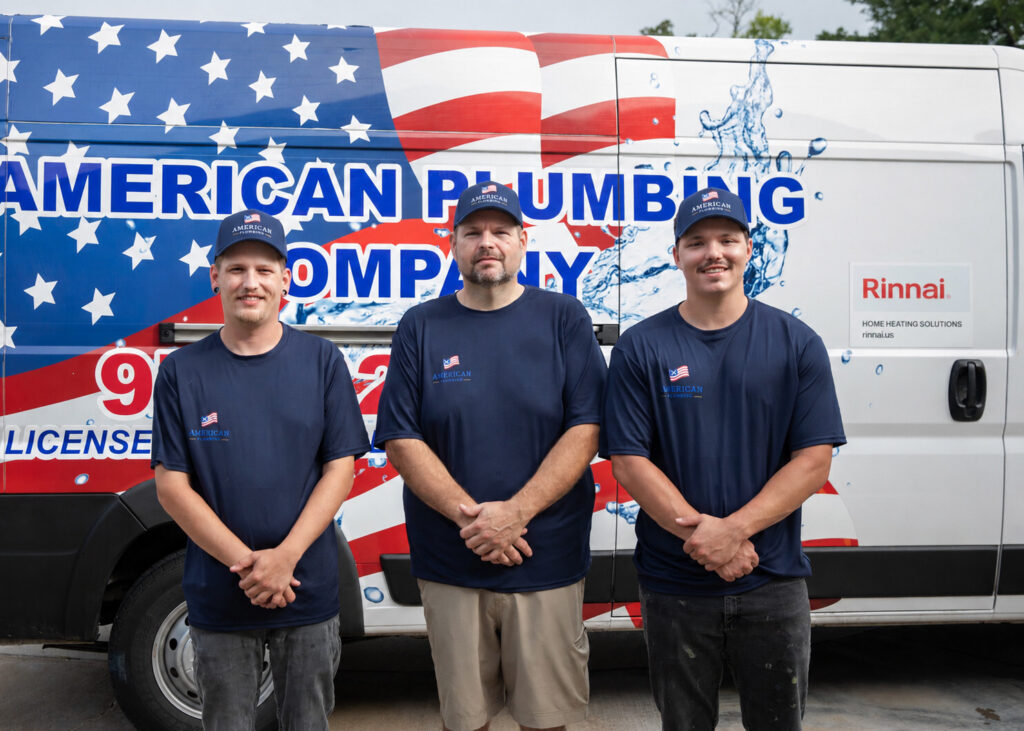
A Bryan-Based Plumbing Company Serving the Brazos Valley
American Plumbing Company serves Bryan–College Station and surrounding Brazos Valley communities with residential plumbing services. Its website lists tank and tankless water-heater installation and repair, whole-home filtration and reverse osmosis, plumbing installation and repiping, leak detection, toilet work, sewer inspection, drain cleaning, emergency plumbing, and service plans. The company identifies founder Jarrid Perry as a Master Plumber and lists license RMP-43155. It also describes Perry as having more than 20 years of licensed-plumbing experience and notes service in Bryan, College Station, Hearne, Navasota, Caldwell, and nearby communities. The company emphasizes that its team is local to Bryan and offers same-day and next-day scheduling for many services. Readers can check the American Plumbing Company website for current service details and contact options.
Start AI at the Administrative Edge of the Job
A plumbing business does not need AI to decide how to repair a water line. It may benefit from AI handling the repetitive information work before and after a licensed professional makes that decision.
For American Plumbing Company, incoming calls, forms, and emails could be converted into a standard service-request summary. The assistant could identify the property, requested service, described symptoms, urgency, access information, and unanswered questions. It could also retrieve a limited summary of previous work for the same customer if the identity match is reliable. Office staff would review everything before scheduling.
Use Existing Job History as Context, Not as a Diagnosis
A returning customer may have prior water-heater work, a previous leak-detection visit, filtration equipment, or an open recommendation. AI can summarize those records for the assigned plumber so the technician does not have to search through multiple old jobs. The OpenAI tools documentation describes how applications can combine a model with controlled tools and data. Comparable workflows can use Gemini, Claude, or other models and connect through existing APIs.
That summary must remain traceable to source records. If the CRM contains duplicate addresses or incomplete equipment data, the system should flag uncertainty rather than fill gaps with plausible text.
An End-to-End Service Brief Workflow
Consider a customer reporting a slab-leak concern. The inputs are the customer’s description, address, prior service history, appointment preferences, and any photos or documents the customer supplied. The friction is that office staff must gather these pieces, decide what matters for dispatch, and make sure the plumber receives them.
An AI workflow could parse the request, match the customer record, summarize relevant prior jobs, identify missing intake fields, and prepare a draft job brief. Zapier, Make, n8n, Apps Script, Power Automate, or the field-service system’s integration layer could place the brief into the existing job. A person would confirm the appointment and assignment. The plumber would diagnose the issue on site. Afterward, AI could convert dictated notes into a draft service summary that the plumber edits and approves before the customer receives it.
The AI would not determine whether a leak exists, choose a repair method, interpret plumbing code, authorize a water or gas shutdown, price the work, or claim a repair is complete. Its authority ends at preparation and routing.
Service Plans Can Be Easier to Administer
American Plumbing Company offers service plans, creating a straightforward follow-up use case. A scheduled workflow could identify accounts due for review, prepare a list of customers and relevant plan details, and draft reminders from approved language. Staff would confirm eligibility and decide whether to send anything.
Managers could also use AI to summarize recurring administrative patterns: which service requests arrive without enough information, which appointment questions repeat, or which follow-up tasks remain open. That can lead to better forms and checklists without using the model to score plumbers or make personnel decisions.
Approved Knowledge Should Be Searchable
An internal assistant could help office staff and technicians retrieve approved policies, service-plan rules, warranty processes, financing guidance, customer-communication templates, onboarding material, and escalation procedures. Microsoft’s Copilot Studio documentation describes grounding agent answers in configured business knowledge sources.
The same design principle works across platforms: establish a current source of truth, limit access by role, separate superseded documents, test realistic questions, and give people a way to see or verify the source behind an answer.
Human Control Is Non-Negotiable in Plumbing
American Plumbing Company’s qualified people should retain control over diagnosis, safety decisions, code compliance, repair and replacement recommendations, materials, estimates, guarantees, scheduling promises, and customer approvals. AI should not communicate a technical conclusion unless a qualified person has reviewed it.
Data quality and privacy also matter. Customer addresses, access details, payment information, and property histories should not be copied indiscriminately into general-purpose tools. The system should use only the data required for the defined workflow.
Test One Workflow Before Building More
For local home-service businesses, the most useful AI projects are often small. Maisy AI Consulting in College Station helps businesses evaluate repetitive work and build focused automation around existing systems. The Maisy knowledge-management model emphasizes governed sources, permissions, testing, and human approval. For a business like American Plumbing Company, starting with service-request summaries or job-history briefs keeps the pilot practical while the licensed plumbing work stays exactly where it belongs—with the plumber.