Boyd Ready Mix: Concrete Services Across the Brazos Valley Since 1996
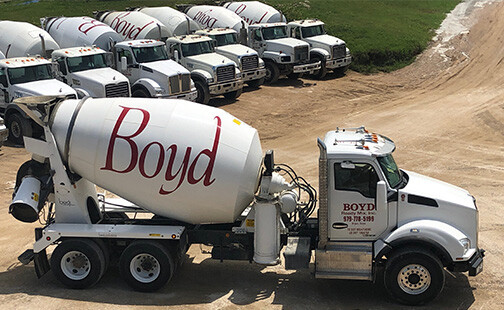
Boyd Ready Mix has served the greater Brazos Valley since founder Greg Boyd started the company in March 1996. Based in Bryan, the company’s official site highlights ready-mix concrete for residential, commercial, specialty and do-it-yourself projects, along with multiple plant locations and resources such as concrete calculators and customer information. Boyd Ready Mix presents its mission around professionalism, integrity, honesty and fairness while supporting customers across different project types. Its work sits at the intersection of construction planning, material delivery, scheduling and field coordination, where clear information matters. Contractors, homeowners and project teams can review current services and plant information on the Boyd Ready Mix website.
Where practical AI can support concrete operations
Ready-mix work depends on accurate project information. Order quantity, mix requirements, jobsite location, access conditions, pour timing and contact details all need to be clear before a truck leaves the plant. AI can help organize those inputs without taking control of technical, safety or dispatch decisions.
For Boyd Ready Mix, one useful pattern would be an intake assistant that turns incoming calls, emails or forms into a structured order-preparation brief. It could extract the documented address, requested quantity, requested delivery window, job contact and project type, then flag missing information for staff review.
An end-to-end order preparation workflow
Imagine a contractor sends an email with a project address, estimated yardage, requested date and a note about limited site access. The friction is that key details may be buried in a message thread. An AI workflow could read the request, compare it against an approved checklist and prepare a draft order summary in the existing dispatch, CRM or shared operations system.
A person would then confirm the mix, quantity, plant, delivery sequence, timing and site conditions. The AI would not select a concrete mix, calculate engineering requirements, authorize loading, dispatch trucks, or make a safety judgment. Its job ends at preparing organized information for qualified staff.
OpenAI business tools can support controlled summarization and document workflows, while Microsoft Copilot Studio can connect approved knowledge and operational processes. Other platforms can support the same pattern when permissions, data ownership and integrations are properly governed.
Dispatch briefs and customer updates
Once an order is confirmed, AI can prepare a concise dispatch brief from approved order data. That can help office staff and dispatchers see the jobsite, contact, timing notes and special instructions in one place. If a schedule changes, AI can summarize what changed and prepare a customer-update draft for human review.
Boyd Ready Mix would still keep dispatchers and operations leaders in control of truck assignments, routing, loading, schedule commitments and exceptions. AI should never promise an arrival time or alter an order without a person approving the change.
Project history and repeat customers
Repeat customers often have recurring locations, billing contacts or standard operating preferences. A controlled assistant could retrieve approved historical information and present it as a reference brief. The source system remains authoritative, and staff should verify that old requirements still apply before reusing anything.
This kind of governed knowledge retrieval is a practical form of local AI implementation. Maisy focuses on organizing information and improving workflows before adding automation. More about that approach is available at AskMaisy.com.
Internal knowledge and training
Concrete operations also rely on institutional knowledge: order-entry procedures, plant contacts, escalation paths, customer credit steps, delivery documentation and safety policies. An internal assistant can help employees locate the current approved procedure without searching across folders or asking the same question repeatedly.
The quality of that assistant depends on source quality. Policies need owners, dates and version control. Permissions should restrict financial, customer and employee information to authorized staff. If the source material is outdated, the AI will simply retrieve outdated information faster.
What stays under human control
Concrete mix selection, engineering requirements, quality decisions, plant operations, truck loading, dispatch, jobsite safety, pricing, credit decisions, delivery commitments and customer exceptions remain human responsibilities. AI should not infer technical requirements from incomplete project notes. It should surface missing information and route uncertainty to qualified people.
A practical Bryan pilot
A useful first pilot for Boyd Ready Mix could focus on order-preparation summaries. Start with a narrow set of incoming requests, compare the AI-generated brief against the current intake checklist and require staff approval before anything reaches dispatch. Track completeness, corrections and staff trust rather than trying to automate the whole ordering process.
If that pilot proves reliable, the same approach can extend to change summaries, repeat-customer briefs or internal procedure lookup. Maisy provides practical AI solutions and consulting in College Station, Texas, for small and mid-sized businesses that want to improve work without replacing core systems. To discuss a focused local pilot, contact Maisy.