
AGS Tree Services: Tree Care and Landscaping in Bryan
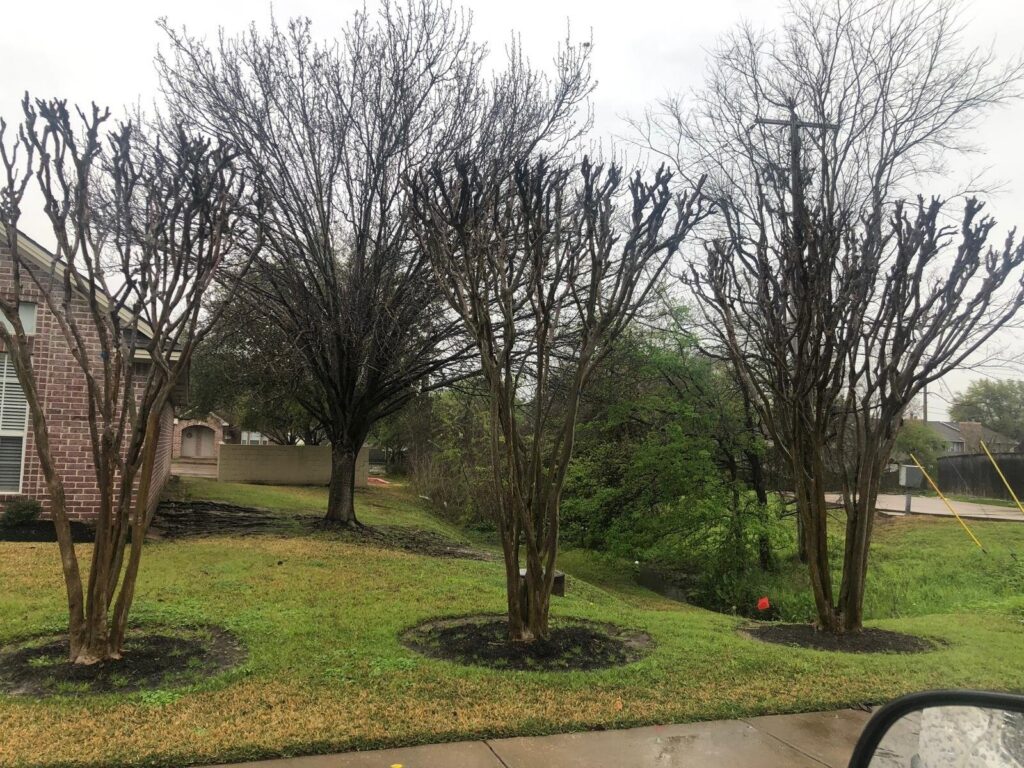
Tree care and landscape services from Bryan
AGS Tree Services is a Bryan-based company offering tree and landscape work for local property owners. Its current website lists tree trimming, tree removal, stump grinding, landscaping and irrigation, French drains, concrete applications, flagstone work, and Christmas-light services. The company says it has more than 10 years of experience in landscaping, pruning, and maintenance of green areas, and its listed Bryan address is on Louis Street. Tree and landscape jobs often begin with a photo or short message but quickly require site conditions, access, equipment, crew planning, customer preferences, and safety considerations to be organized. Local homeowners and property managers can review current services and contact information directly on the AGS Tree Services website.
AI can improve intake before anyone touches a tree
For AGS Tree Services, a useful AI system would start with information organization. A customer might submit an address, photos, and a sentence such as “large limb over driveway.” AI can structure that request, identify missing questions, and prepare a site-visit brief. It should not decide whether a tree is hazardous, recommend a cut from a photo alone, or direct a crew.
ChatGPT, Gemini, Claude, or Copilot can summarize text and images; Zapier, Make, n8n, Apps Script, or Power Automate can route reviewed information to scheduling, CRM, email, or job-management systems. The implementation should preserve the company’s current workflow while reducing repetitive data entry.
An end-to-end tree-service inquiry workflow
Inputs could include a website form, property address, customer photos, requested service, gate or access notes, and prior job history. The friction is that a short request often leaves the estimator without enough context to plan the visit.
An AI intake step could extract the reported issue, group photos, note the location described by the customer, and generate a checklist of unanswered questions. The system could then create a draft estimate-visit brief in the existing job queue. An AGS Tree Services employee reviews the information, decides whether the request fits the company’s services, and schedules the appropriate visit.
AI has no authority to assess tree stability, determine electrical-clearance safety, choose rigging, calculate load, approve climbing methods, price the work, promise a schedule, or direct removal. Those decisions remain with experienced people on site. A workflow can enforce review; Microsoft’s documentation for Power Automate approvals shows how a process can wait for a human response before proceeding.
From site notes to a crew-ready brief
After an estimator visits the property, notes can be inconsistent: voice notes, photos, measurements, customer preferences, disposal instructions, and equipment considerations. AI can help turn those inputs into a standardized draft brief with sections for scope, access, customer constraints, and open questions.
The estimator then verifies the scope and approves the record. The crew receives only the approved version. This is important because a model may misread dimensions, confuse one photo with another, or treat a customer request as an approved method. The official work order and supervisor direction remain authoritative.
Internal knowledge for recurring questions
AGS Tree Services could also build a small internal knowledge assistant around approved service descriptions, equipment checklists, irrigation procedures, customer preparation instructions, and company policies. Staff could ask for the current source instead of searching old messages.
Permissions should match job roles. Customer addresses, gate codes, employee records, and billing information should not be broadly available. Google explains that Gemini access to Workspace data is constrained by administrator and content-owner permissions; the same principle should guide any AI platform connected to business files.
Landscape and irrigation follow-up
For recurring landscape or irrigation work, AI can summarize previous visits, highlight unresolved issues, and prepare a follow-up checklist. It can also draft a customer update from approved notes. AGS Tree Services staff would verify what was actually completed and what needs attention before anything is sent.
The system should not diagnose plant disease, determine irrigation modifications, promise drainage outcomes, or authorize chemical use without qualified human review. If the workflow uses weather, maps, or third-party data, those integrations need clear ownership and testing as well.
What stays under human control
Tree risk, climbing and rigging, proximity to utilities, equipment operation, pruning and removal decisions, irrigation modifications, drainage design, chemical use, pricing, schedules, and customer commitments remain human responsibilities. An AI project also needs documented source ownership, data-quality rules, access permissions, retention policies, licensing review, integration monitoring, and a process for correcting bad output.
Testing should include poor photos, multiple trees in one request, duplicate addresses, vague service descriptions, changing scopes, and jobs where landscape and tree work overlap. Maintenance is not optional; services, policies, equipment, and team responsibilities change.
A practical Bryan pilot
A good first pilot for AGS Tree Services would be inquiry-to-site-visit briefing. The assistant organizes customer-provided information and highlights missing details, but the estimator decides everything consequential. That is a small enough workflow to test without introducing operational risk.
Maisy offers practical AI solutions and consulting in College Station, Texas for local businesses that want to improve repetitive office work and knowledge flow. Maisy also builds custom AI agents for small business when a team needs a reusable, permission-aware assistant. The objective is better preparation around skilled field work, not automated judgment in the field.