
BCS Tree Solution: Family-Owned Tree Care Across Bryan and Brazos County
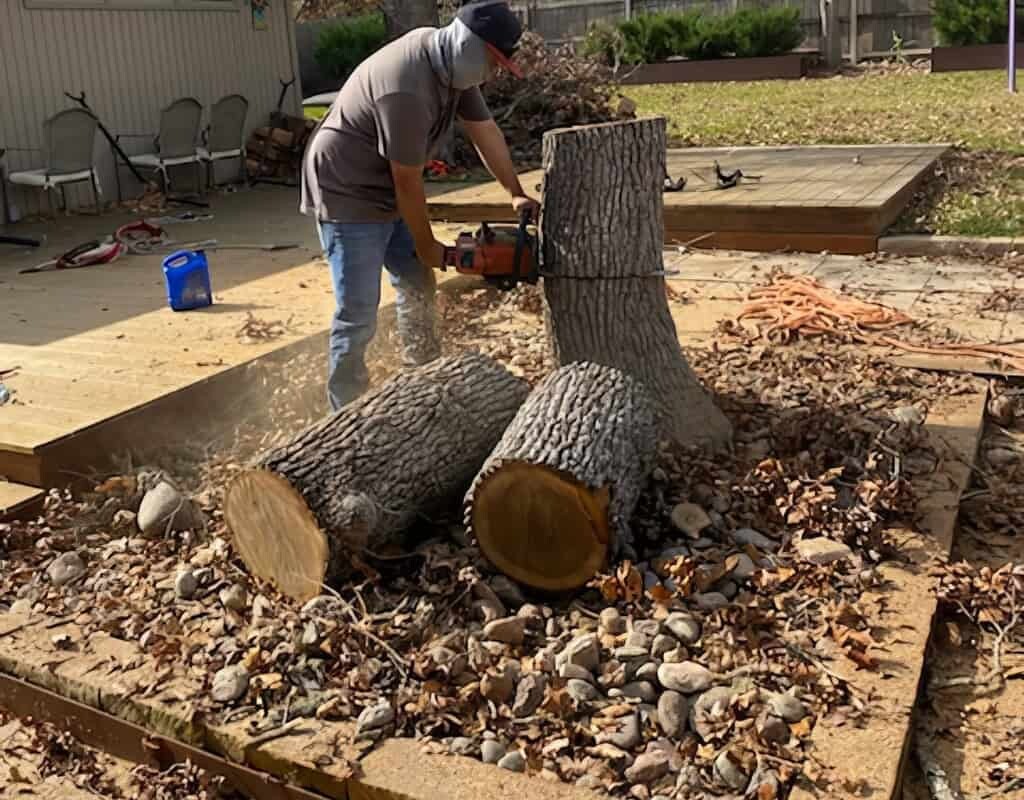
Tree work around Bryan and College Station ranges from routine trimming to large removals, planting and stump cleanup. BCS Tree Solution presents itself as a family-owned Bryan business serving customers across Brazos County, with services that include tree removal, tree trimming and pruning, tree planting and stump grinding. The company website also highlights round-the-clock availability for urgent needs and describes a local operation built around practical tree-care work.
A family-owned tree company serving the Brazos Valley
BCS Tree Solution is based in Bryan and serves Bryan, College Station and the wider Brazos County area. Its site says the company is locally owned and family operated, with more than 20 years of combined experience. The service menu covers the full life cycle of common residential and property tree needs: trimming and pruning, removal, planting and stump grinding. That mix gives property owners one local contact for both maintenance and larger one-time projects. Readers looking for current service information, availability or a quote can visit the BCS Tree Solution website.
A business with this service mix also illustrates where practical AI can help without touching the skilled work itself. Tree care depends on site conditions, professional judgment, equipment, safety planning and hands-on execution. The administrative work surrounding a project is different. Customer descriptions, photos, addresses, access instructions, prior work and follow-up notes can be organized more consistently.
Turning estimate requests into usable project briefs
For a business like BCS Tree Solution, estimate intake is a strong place to start. A customer might say that a tree needs to come down, several limbs need pruning, a stump remains from an earlier removal or a new tree needs to be planted. That request may include photos, but it may not include the tree location, access limitations, nearby structures or other details that help prepare for a site visit.
An AI-assisted workflow could read the incoming form or email and create a structured summary. It could identify the requested service, address, customer contact information, photo attachments and any access details the customer actually provided. It could also flag missing administrative information for staff. The system would not decide that removal is necessary, select a pruning method or determine whether a tree is hazardous.
This same information-first approach can support other contractor operations. local landscaping projects depend on clean site handoffs, while site contractors benefit from organized project details before crews begin work.
An end-to-end tree-service intake workflow
Imagine a customer requesting pruning for several mature trees. First, the customer submits a form with the property address, contact information, a short description and photos. The request enters the company’s existing inbox, CRM or scheduling system.
Second, an AI model such as ChatGPT, Gemini, Claude or Copilot extracts only what the customer supplied. It builds a project card with the service requested, the number of trees mentioned, areas of the property described, access notes, timing requests and attached images. It can compare the intake against an approved checklist and flag missing items such as a callback number or unclear property access.
Third, a staff member reviews the brief. If information is missing, AI can prepare a short follow-up draft, but the employee approves or edits it before sending. Once a site visit is scheduled, the estimator or crew receives the original customer description, the organized photos and the approved administrative notes in one place.
Fourth, after the visit or completed work, staff notes can be added to the record. AI can help convert those approved notes into a clear customer update and a searchable property history. If the customer later asks about stump grinding, planting or another pruning visit, the team can retrieve what was previously documented instead of rebuilding context from scattered messages.
Connections among forms, email, spreadsheets, a CRM and scheduling tools could be handled with Zapier, Make, n8n, Google Apps Script or Power Automate. The goal is not a new technology stack. It is a cleaner handoff among the tools the company already uses.
Safety decisions must remain human
Tree care has hazards that cannot be reduced to an automated summary. The OSHA tree-care overview and OSHA tree-care standards information are useful reminders that qualified people must control the work itself. An AI system should not authorize climbing, rigging, chainsaw operations, work near electrical lines, traffic control, equipment setup or emergency removal.
For BCS Tree Solution or another local tree company, AI should stay on the information side of the boundary. People assess the tree, property, utilities, weather, equipment and work method. People set the scope and price. People decide whether a job can be performed safely.
A small pilot before broader automation
A sensible pilot could begin with estimate requests only. Maisy can map the current intake process, define the fields that make a useful project brief, build a human-reviewed workflow and test it with a limited number of inquiries. Public information and simulated requests can be used first, reducing risk while the process is refined.
That is the practical model behind Maisy AI Consulting: Understand the existing work, Organize the information and Empower the people already responsible for the outcome. For small business AI in College Station and Bryan, the useful win is often not replacing a field process. It is making sure the right information reaches the right person before the truck leaves for the job.