
First Choice Cleaning Services: Comprehensive Cleaning Across Brazos County
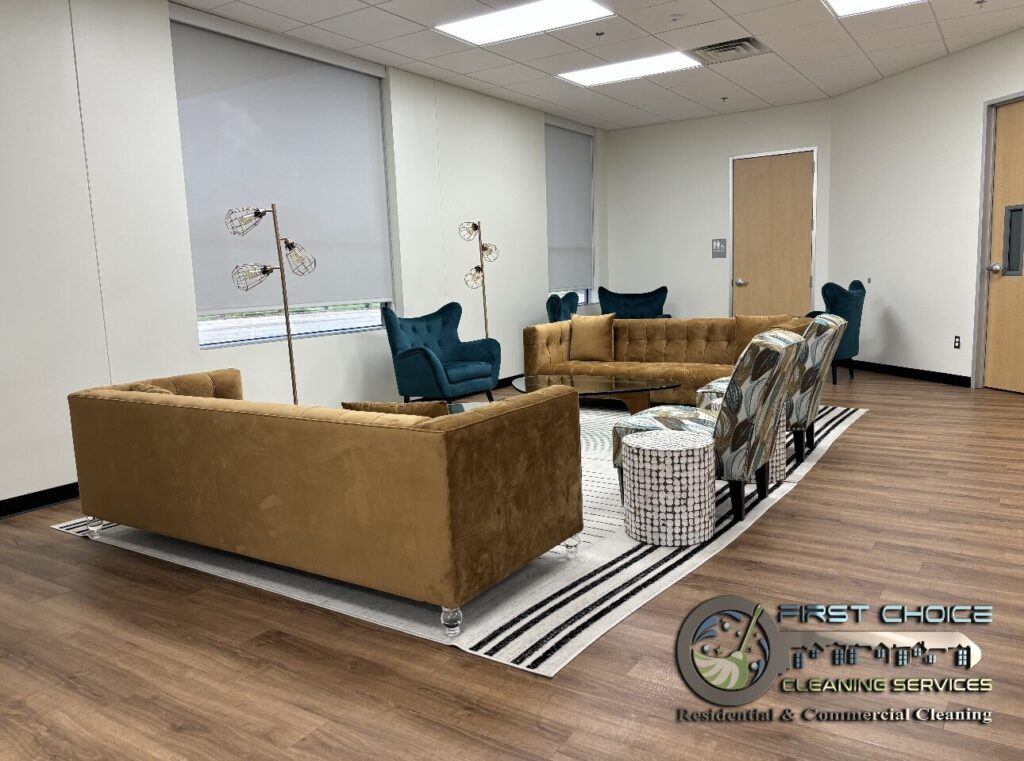
A Wide Cleaning Menu for Brazos County Properties
First Choice Cleaning Services offers residential and commercial cleaning across Brazos County and surrounding areas. Its service page lists office cleaning, post-construction cleaning, deep cleaning, recurring cleaning, janitorial cleaning, short-term-rental turnovers, move-in and move-out cleaning, porter services, restroom cleaning, sanitizing, vacuuming, surface cleaning, and cleaning for medical, gym, and church facilities. The company says recurring service can be scheduled daily, weekly, bi-weekly, or monthly, and that it can provide sanitary and stock supplies. For quotes, the business says it evaluates the property to develop an accurate scope. That combination of recurring facility work and one-time cleaning projects gives customers several ways to use the company. Readers who want the current service list can visit the First Choice Cleaning Services website before requesting a quote.
Cleaning Operations Depend on Clear Scopes
In a cleaning business, small details matter: square footage, room types, service frequency, access windows, alarm instructions, surface restrictions, supply responsibilities, special requests, and areas that are out of scope. The most practical use of AI is not deciding how to clean a site. It is organizing those details so managers and crews see the same approved instructions.
For First Choice Cleaning Services, an intake assistant could summarize a website inquiry, email, or phone note into a standardized quote brief. It could list property type, requested frequency, special areas, preferred timing, and missing information. A manager would review the brief, inspect the property as needed, and determine the actual scope and price.
Turn Approved Scopes Into Crew-Ready Job Briefs
Once a customer accepts a scope, AI could transform the approved service agreement into a concise job brief for the assigned crew. The brief might separate daily tasks, rotating tasks, supply responsibilities, access notes, customer preferences, and escalation instructions. The OpenAI tools documentation shows how models can interact with files and controlled application functions, but the same workflow pattern can be implemented with Gemini, Claude, or other models.
The source document matters. A draft proposal and a signed scope should not have equal authority. The workflow should identify which record is current, who owns changes, and when updates become effective.
An End-to-End Quote-to-Job Workflow
Imagine a local office requests recurring evening cleaning. The inputs are the inquiry, site-walk notes, approved proposal, access instructions, and service schedule. The friction is that important details can be spread among email, a calendar, notes, and a contract.
After a manager approves the quote, an AI workflow could read the approved scope, extract the required tasks and frequency, create a crew checklist, and route it into the company’s existing scheduling or task system. Zapier, Make, n8n, Apps Script, Power Automate, or a CRM integration could handle the movement between systems. The assigned manager would review the checklist before it reaches the crew. After service, exception notes—such as a locked room or missing supply—could be summarized for the manager and added to the next visit brief if approved.
The model would not set pricing, assign staff without authorization, choose chemicals for a surface, change a customer’s scope, promise completion times, or send a complaint response on its own. Those actions remain with people.
Recurring Work Creates Useful Patterns
First Choice Cleaning Services could use AI to summarize recurring operational patterns without turning them into automatic judgments. Managers could review which locations generate repeated access issues, which forms are missing information, which supplies are frequently requested, or which customer instructions change most often. That can reveal where a checklist or intake form should improve.
A separate knowledge assistant could answer staff questions from approved cleaning procedures, onboarding guides, safety instructions, customer-specific scope documents, and escalation rules. Microsoft’s Copilot Studio knowledge documentation describes grounding an agent in configured business sources. Other platforms can follow the same principle: use approved material, preserve permissions, and show the source behind important answers.
Human Review Protects Customers and Crews
Cleaning companies handle keys, alarm codes, private spaces, customer schedules, and sometimes sensitive facility information. Access data should be restricted to the minimum people and systems that need it. Medical and other specialized sites may also have requirements that should come from the customer’s approved instructions and applicable rules, not from a general AI model.
Managers should retain control over staffing, safety, chemical and equipment choices, quality checks, pricing, complaint resolution, customer promises, and scope changes. AI can prepare a better information package; it should not become an invisible supervisor making unreviewed decisions.
Start With One Repetitive Administrative Step
For a company like First Choice Cleaning Services, a pilot could focus on quote intake, job-brief creation, or recurring exception summaries. Maisy helps small businesses with practical AI in College Station and Bryan by working around the systems a team already uses. The Maisy Knowledge Hub approach emphasizes source ownership, permissions, testing, and human approval. A small, controlled workflow is enough to learn whether AI can make day-to-day administration easier without disrupting the hands-on service that customers are actually buying.