
Lusher Engineering Services: Controls, Robotics and Product Development Expertise in Bryan
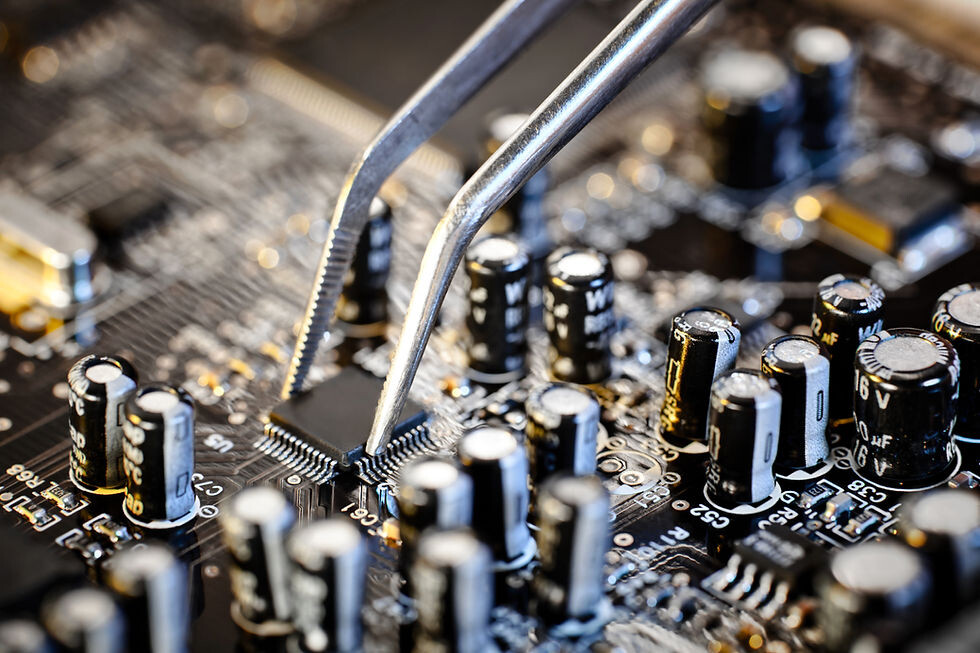
Some engineering companies specialize in a narrow discipline. Bryan-based Lusher Engineering Services, PLLC presents a much broader mix, spanning controls, instrumentation, software, robotics and product-development work for companies that need specialized engineering support.
A multidisciplinary engineering practice in Bryan
Lusher Engineering’s website lists experience with automated control systems, remote monitoring and control, image processing, high-speed camera systems, software engineering, robotics, motor and hydraulic controls, oil-and-gas control systems, embedded systems, instrumentation, process design, wireless communications, Windows and Linux applications, database software, data acquisition, FPGA systems, GPU programming and project management. The firm says its experience allows it to work on projects ranging from a simple instrumentation system to a complex robotic-arm control system. That breadth gives clients a local resource for projects that cross traditional boundaries between hardware, software, controls and data. Businesses evaluating current capabilities or a potential project can visit Lusher Engineering’s official site for its latest service information and contact details.
A company with that technical range is also a useful example of where AI can help organize project knowledge and repetitive engineering-administration work without being given authority over design, safety or system-control decisions.
Where AI could help a technical project team
Engineering projects often produce a large trail of requirements, meeting notes, test results, code documentation, drawings, vendor manuals and change requests. AI can be useful as a preparation layer over that information. It can summarize an approved requirements package, build a source-linked list of open questions, compare revisions and help a project manager see which decisions still need an owner.
For a company like Lusher Engineering, that could mean an internal assistant that knows approved project documentation but cannot change production code, control equipment or write directly to a live system. The same principle appears in our profile of local IT operations in Bryan–College Station: AI can organize operational information while credentials, configuration changes and consequential technical actions stay with qualified people.
A requirements-to-test workflow
Consider a hypothetical controls project that begins with a customer specification, a set of equipment manuals, meeting notes and a list of acceptance criteria. First, the approved documents are placed in a project workspace with explicit version control. Second, an AI assistant extracts each requirement into a structured table and includes a citation back to the exact source document and section. Third, it flags ambiguous language or requirements that appear to conflict, but it does not resolve them on its own.
Fourth, an engineer reviews the table and decides which items need clarification. Fifth, after the design team has defined an approved test plan, the assistant can map requirements to test cases and identify requirements that do not yet have an associated verification step. Sixth, after testing, it can summarize results already recorded by engineers and prepare a draft acceptance-status report. A person verifies every result before anything is shared with the customer.
This kind of workflow can be implemented in many stacks. NIST’s AI Risk Management Framework provides a useful governance reference for managing AI risk, while AI by Zapier is one current example of a platform that can add model-powered analysis steps to deterministic business workflows. Other organizations may prefer Microsoft, Google, OpenAI, Anthropic, Make or n8n depending on their existing systems and security requirements.
Making technical knowledge easier to retrieve
Another opportunity is internal knowledge retrieval. A multidisciplinary engineering practice can accumulate standards, preferred component information, setup notes, troubleshooting histories, commissioning checklists and lessons learned across many projects. A controlled assistant can help staff find approved information faster, particularly when the answer is spread across several folders or documents.
The key is source traceability. The assistant should show where an answer came from, distinguish current from superseded documentation and refuse to improvise when the source set does not support an answer. That boundary is especially important in controls and robotics, where incorrect instructions can create operational or safety risks. Our local feature on infrastructure and business-continuity operations in College Station uses the same read-only idea for runbooks and support information.
What stays under engineering control
AI should not independently change PLC logic, production code, control parameters, safety interlocks, network configurations or hardware selections. It should not certify a test result, approve an engineering design, decide that equipment is safe to operate or commit a client to cost and schedule changes. Those decisions belong to engineers and project leaders who understand the system and the consequences.
Useful pilots also depend on clean source material, permission controls, clear project ownership, reliable versioning and test cases that expose mistakes before the workflow touches live information. When confidential customer designs or proprietary code are involved, the chosen AI platform must also meet the organization’s data-handling requirements.
A practical starting point in the Brazos Valley
For AI automation in College Station or Bryan, a technical firm does not need to begin with a system that acts autonomously. A better pilot may be a read-only requirements assistant running against a completed project. Staff can measure whether its summaries, requirement tables and source links are genuinely useful before connecting it to active project systems.
Maisy AI Consulting provides practical AI solutions and consulting in College Station, Texas. For an engineering business with Lusher Engineering’s range of controls, software, instrumentation and product-development work, Maisy would begin by understanding one information-heavy workflow, organizing the approved knowledge behind it, and empowering engineers with a reviewed assistant that supports the work without taking control of it.