
Wright Naeger Dentistry: A College Station Dental Practice Serving the Community Since 1976
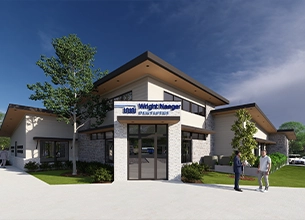
A dental practice with deep College Station roots
Wright Naeger Dentistry says its College Station practice originally opened in 1976 and today operates from a new office on Greens Prairie Road. The practice lists Dr. Stephen Wright, Dr. Andrew Naeger and Dr. Baylee Teafatiller and provides preventive, restorative and cosmetic dentistry along with dental implants, sedation options and emergency care. Its site also describes an in-house savings plan for uninsured patients and a new facility designed with expanded treatment space. For families looking for a College Station dentist, the official website provides current service, scheduling, financing and office information.
Dental practices also manage a large volume of administrative information. Carefully governed AI can help organize that work, but clinical decisions and protected patient information require much tighter boundaries than ordinary office automation.
Administrative intake before the appointment
An appointment request can include contact details, preferred times, insurance questions and sometimes symptoms. AI can classify the administrative portion, check whether required non-clinical fields are complete and prepare a staff summary. If a message contains pain, trauma, medication questions or other clinical information, the workflow should route it to trained staff rather than generating patient-specific advice.
Any use of protected health information requires appropriate safeguards and vendor arrangements. The HHS HIPAA Privacy Rule resources provide the regulatory starting point. Practices should also review the contractual and security documentation for any AI platform before patient data is introduced.
Making approved office knowledge easier to find
Wright Naeger Dentistry could use a controlled assistant for non-clinical office knowledge: scheduling policies, new-patient instructions, savings-plan information, approved insurance procedures, equipment checklists and staff onboarding material. The assistant should answer from designated sources and show where the information came from.
Tools can include Google Workspace with Gemini, Microsoft Copilot, ChatGPT business offerings or other enterprise knowledge systems. Microsoft Copilot Studio is one example of a platform that can connect assistants to governed knowledge sources. The best choice depends on existing systems, licensing, permissions and privacy requirements.
An end-to-end new-patient workflow
Consider a new-patient appointment request. The input is a secure form containing contact information, scheduling preferences and administrative details. The friction is that staff may have to review multiple fields, identify missing paperwork and transfer information into the practice-management workflow.
An AI step could check the administrative record for completeness, summarize the request and flag missing non-clinical items. A staff member reviews the result, handles any clinical or urgent content, and confirms the next action. After the appointment is scheduled, AI could draft a routine preparation reminder based only on approved office instructions. Staff approve the communication before it is sent.
The AI has no authority to diagnose, interpret X-rays, determine urgency, recommend treatment, prescribe medication, obtain clinical consent or tell a patient whether a procedure is appropriate. Those decisions remain with Wright Naeger Dentistry’s qualified dental professionals.
Reducing repetitive internal searching
A multi-provider practice has recurring questions about office processes, equipment, forms, insurance workflows and patient communication standards. A permissioned knowledge assistant can reduce time spent hunting through folders, but it needs clear ownership. Each source should have an owner, effective date and review process.
Permissions matter just as much as accuracy. An employee should not gain access to information through an AI assistant that they could not access in the underlying system. Logs, retention settings and integrations need to follow the practice’s privacy and security policies.
Operational summaries without clinical authority
AI can also summarize de-identified or appropriately governed operational data: common administrative questions, missing-form patterns, scheduling categories or recurring training needs. That can help managers improve forms and procedures. It should not evaluate a dentist’s clinical judgment or generate patient-specific treatment recommendations.
Wright Naeger Dentistry remains responsible for the professional care described on its site. AI is best treated as an administrative preparation layer around that work, not a substitute for the relationship between patient and dental team.
A conservative local pilot
Maisy’s AI resources for small business emphasize narrow, testable workflows. A dental practice could begin with public website information or sanitized sample inquiries, building an internal office-information assistant before considering any protected patient data.
Maisy provides practical AI solutions and consulting in College Station, Texas. For a practice like Wright Naeger Dentistry, a pilot could map an administrative process, define authoritative sources and access rules, create human escalation points and test accuracy without changing clinical systems. The goal is simpler office information flow while clinical authority remains entirely with the dental team.