An internal AI assistant can explain how work should be done, but that does not make it the right place to store every customer record, employee case or financial transaction.
A company preparing an AI knowledge hub may be tempted to place all of its business information in one searchable system.
Customer records live in the CRM. Employee information sits in the HR platform. Invoices and payments are stored in accounting software. Procedures are scattered through SharePoint, Teams and employee folders. Combining everything may appear to offer employees one convenient place to ask questions.
That approach confuses two different functions.
Operational software records what happened to a specific customer, employee, payment or case. A knowledge hub explains what employees should do, which rules apply and where responsibility belongs.
Understanding that distinction helps an organization design a more useful AI system without weakening the applications it already depends on.
Systems of Record Preserve Transactions
A system of record holds the official version of structured business data.
A CRM may contain a customer’s contact information, sales stage, account activity and service history. An HR system may record employment status, compensation, leave balances and benefit elections. Accounting software records invoices, payments, expenses and ledger entries.
These platforms do more than store information. They enforce workflows, validate entries, maintain audit histories and control who can change records.
Microsoft describes Dataverse as a secure platform for storing and managing business-application data in structured tables. It supports role-based security, relationships, validation rules, workflows and business logic.
Those are characteristics of an operational system. Copying its data into a document library does not create a better source of truth. It may instead create a second, less current version.
A Knowledge Hub Explains How Work Should Be Done
An AI knowledge hub serves a different purpose.
It may help an employee answer questions such as:
- When should a new customer record be created?
- Who may approve a billing adjustment?
- What documents are required before onboarding a contractor?
- How should a complaint be escalated?
- Which procedure applies when a payment cannot be matched?
The CRM can show that a customer complaint exists. It may not explain the company’s full escalation procedure. The accounting system can show an unmatched payment, but the approved correction process may be documented elsewhere.
That procedural and institutional knowledge belongs in the knowledge hub when it has been reviewed, approved and assigned to an owner.
AskMaisy’s current guidance on business-system integrations makes this boundary explicit: operational platforms should remain authoritative for their transactions and records, while Maisy can help employees understand how to use those systems and locate the procedures surrounding them.
Put Guidance in the Hub, Not Duplicate Records
Good knowledge-hub content usually includes policies, standard operating procedures, role guides, checklists, decision rules, exception handling, training materials and escalation paths.
A customer-service agent might need the approved refund policy, examples of qualifying situations and the manager-approval threshold. The customer’s actual purchase and refund status should remain in the CRM or commerce platform.
An HR manager might use the knowledge hub to retrieve the approved leave procedure and required documentation. An employee’s individual leave balance or medical record should remain in the HR system.
A nonprofit employee might need guidance on how to document a donor restriction. The individual gift record should remain in the donor-management platform.
This design avoids unnecessary duplication while helping employees understand the work surrounding each record.
Use Connections for Specific Business Questions
Keeping transactional data in its original system does not mean AI can never access it.
Microsoft 365 agents can use Copilot connectors to reach approved information from external systems such as customer accounts, incident tickets and knowledge articles. Microsoft also allows connector data to be limited to specific projects, repositories, folders or other defined scopes.
The important question is not, “Can we connect this system?” It is, “Which employee question requires this connection?”
An agent may need read-only access to determine whether an open support ticket exists. That does not mean it needs access to every customer record. It may need to display a current order status without receiving permission to change the order.
Every connection should be assessed for purpose, data quality, permissions, licensing, vendor limitations and the consequences of an incorrect answer.
Treat Actions as a Separate Project
Retrieving information and changing information are not the same risk.
A read-oriented assistant might locate a procedure or display selected account information. An agent that creates customers, updates employee records, issues refunds or posts accounting entries can alter the organization’s official data.
Those actions require authorization rules, validation, error handling, logging and human approval where appropriate. They should not be added casually because the platform technically supports automation.
Begin by helping employees find and understand approved information. Add transactional actions only after the organization can define who may perform them, under what conditions and how errors will be detected and corrected.
Choose Sources Deliberately
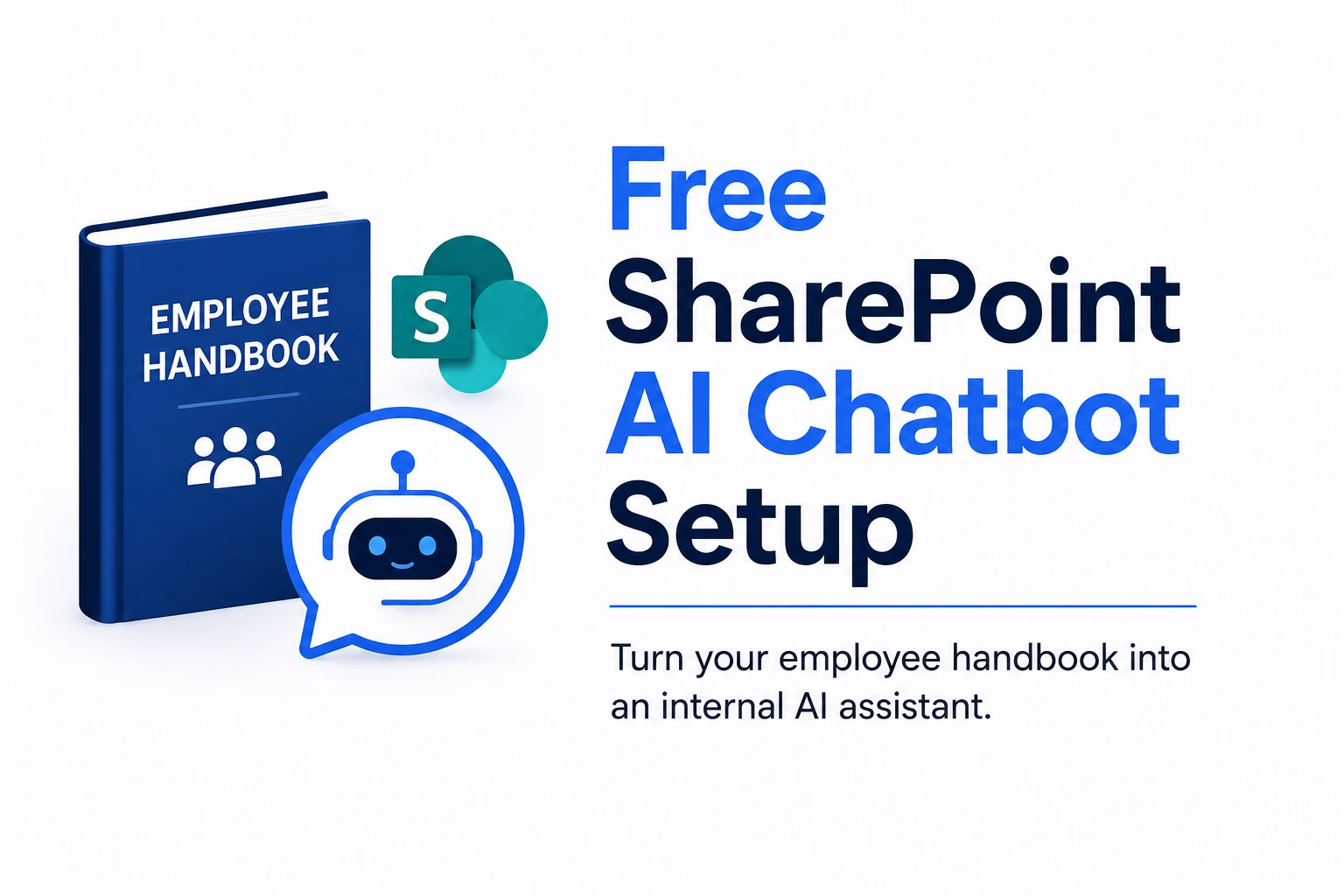
SharePoint can be an effective knowledge source for policies, procedures and reference documents. Microsoft’s Copilot Studio guidance for SharePoint explains that agents can retrieve content from selected SharePoint sites and lists while respecting the signed-in user’s permissions.
That does not mean every SharePoint file should become AI knowledge.
The organization should select approved libraries, separate drafts from published material, assign owners and exclude content that is obsolete, irrelevant or too sensitive for retrieval.
AskMaisy’s explanation of how its governed knowledge layer works follows this model: employees continue maintaining living documents in Microsoft 365 while the knowledge layer tracks approved sources, status, ownership, audience and permissions.
The best internal AI architecture does not force every kind of information into one repository. It preserves each operational system’s authority while giving employees a governed way to understand the procedures, decisions and responsibilities around the records they use.