Yes. A nonprofit AI assistant can help employees determine which approved retention rule applies, where records belong, who owns them and when questions must be escalated. It should not independently decide that a record can be destroyed. Retention periods depend on...
Articles by Topic
Explore Maisy articles connected to this topic.
Why Nonprofit Boards Need a Better System for Preserving Governance Knowledge
Nonprofit boards make decisions that can shape an organization for years. They approve budgets, review executive performance, oversee risk, set strategic direction and protect the organization’s mission. Yet board knowledge is often managed through a collection of...
The Hidden Cost of Scattered Nonprofit Documents
Most nonprofits do not think of document disorder as a major operational expense. There is no obvious invoice for it. The cost appears in small delays throughout the day: Employees searching for policies Managers answering repeated questions Staff recreating documents...
Why Nonprofits Lose Critical Knowledge When Employees Leave
When an experienced employee leaves a nonprofit, the organization rarely loses only one person. It may also lose years of program knowledge, undocumented procedures, key relationships, reporting details, grant requirements, internal workarounds and historical context....
Can an AI Knowledge Hub Access Your Nonprofit’s Databases?
When organizations think about building an AI knowledge hub, they usually focus on documents: Word files, PDFs, policies, manuals, emails, SharePoint pages and training materials. But much of an organization’s important information may live somewhere else. A church...
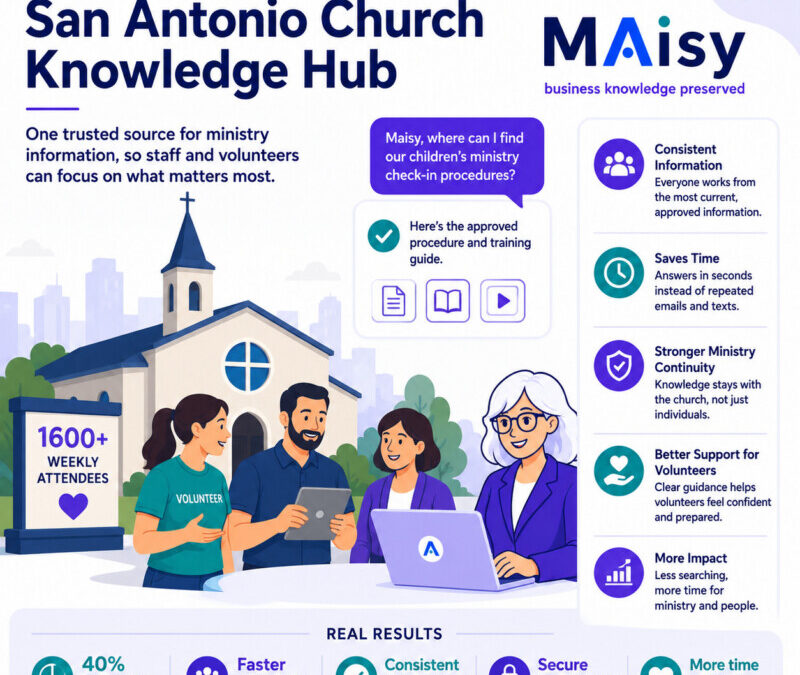
How a San Antonio Church Preserved Ministry Knowledge Across Its Staff and Volunteers
Organization Overview A non-denominational church in San Antonio, Texas, served approximately 1,600 people each week through worship services, children’s programs, student ministry, small groups, outreach, counseling, and community support. The church relied on a...
How a Humane Society Improved Access to Critical Knowledge
How a Humane Society Improved Access to Critical Knowledge Organization Overview An Austin-based humane society with approximately 50 employees and a large volunteer network provides animal sheltering, adoption, foster coordination, community outreach, and support...
How a Houston Early Education Nonprofit Made Its Knowledge Easier to Use
How a Houston Early Education Nonprofit Made Its Knowledge Easier to Use Organization Overview A Houston-based nonprofit with 30 employees developed and distributed early education learning tools for teachers, childcare providers, families, and community...
How an Austin Medspa Standardized Knowledge Across Its Team
How an Austin Medspa Standardized Knowledge Across Its Team Company Overview An Austin-based medspa with 15 employees provided cosmetic treatments, skin services, consultations, and ongoing patient support. The team included providers, aestheticians, front desk...
How an Austin Medical Device Startup Organized Critical Knowledge Before Launch
How an Austin Medical Device Startup Organized Critical Knowledge Before Launch Company Overview An Austin-based medical device startup developed a new hearing aid designed to improve everyday hearing support through modern hardware and software. The growing team...